


Insight
A Nigerian chef’s take on sustainable cultural heritage

Adenike Abisola Adefila is a gastronomy researcher, UN Tourism Gastronomy Ambassador, as well as Co-founder and Head Chef of The Burgundy by ChefStone. She curates a seasonal seven-course menu based on Indigenous African food knowledge and what it can teach the industry about building food systems that last.
Catch a glimpse behind the scenes on Instagram: @theadenikeadefila
Do you think the hospitality industry is moving fast enough on waste reduction? And if not, what’s holding it back?
I don’t think the hospitality industry is moving fast enough on waste reduction. A lot of businesses still prioritize convenience, excess, and appearance over long-term sustainability.
What’s holding it back is mindset, lack of proper training, and the assumption that sustainability is expensive. But in reality, reducing waste often improves creativity, efficiency, and respect for ingredients.
Sustainability should be part of hospitality culture, not just a trend.
What got you personally invested in sustainability and tackling food waste? Was there a moment, or did it build over time?
My relationship with sustainability started in contrast. My first job in a five star hotel exposed me to a culture of excess, with massive buffets, endless brunches, and waste hidden behind luxury.
Working at Lowe in Dubai then shifted my mindset completely. I began to understand total utilization and how thoughtful cooking can reduce waste without reducing quality.
But the deeper lesson came from my roots. Growing up, sustainability was simply how we lived. With something as simple as yam, nothing was wasted. The peels became amala or feed for livestock. That realization grounded everything for me.
Sustainability is not a trend. It is memory and practice.
Has a guest ever said or done something that changed how you think about what ends up in the bin?
The idea of tailored made dietary needs, especially when they are not driven by life threatening allergies, is something I now approach with more intention.
There was a guest who requested that almost every element of her dish be changed because she could already “imagine” the taste profile in her head. She was dining in a group, experiencing a curated journey that is intentionally provocative and rooted in pushing representation of Nigerian and broader African cuisine.
After each replacement dish was prepared and served to her specification, she kept shifting again, and in the end she found herself wanting exactly what everyone else at the table was having.
Moments like that are complex. On one hand, hospitality is about care and adaptation. On the other hand, when a menu is designed as a narrative rather than a list of options, constant restructuring can dilute the intention, and it also creates unnecessary waste through rework, remakes, and unused components.
That experience sharpened something for me around waste perception. It is not always the dramatic moments that change how you think about what ends up in the bin, but the accumulation of small avoidable decisions made in the name of preference rather than necessity.
It reinforced my belief that sustainability in a restaurant is not only about sourcing or technique, but also about how far customization should reasonably go before it starts to disrupt both culinary integrity and resource responsibility.

What’s the biggest (or best) mistake your kitchen made when it comes to waste?
The best mistake was overprepping a highly perishable garnish for a tasting menu. We misjudged demand and ended up with far more than service needed.
Instead of binning it, the team broke it down and repurposed it across the following days into sauces, a fermented element, and staff meal components.
What was initially “waste” became more interesting than the original application. It exposed how easily precision planning in fine dining can still generate avoidable waste, and it reinforced a key shift for us:
Nothing should be designed for a single life cycle in the kitchen.
Do you have a specific number that captures your impact on food waste?
Under 10%. That’s the internal benchmark we operate with at The Burgundy for unavoidable organic waste reaching disposal, driven by total utilization thinking – where peels, trims, and byproducts are intentionally routed into secondary dishes, ferments, stocks, or staff nourishment instead of leaving the system.
It’s less about perfection and more about shrinking “dead waste” to a residual margin that no longer carries creative or nutritional value.
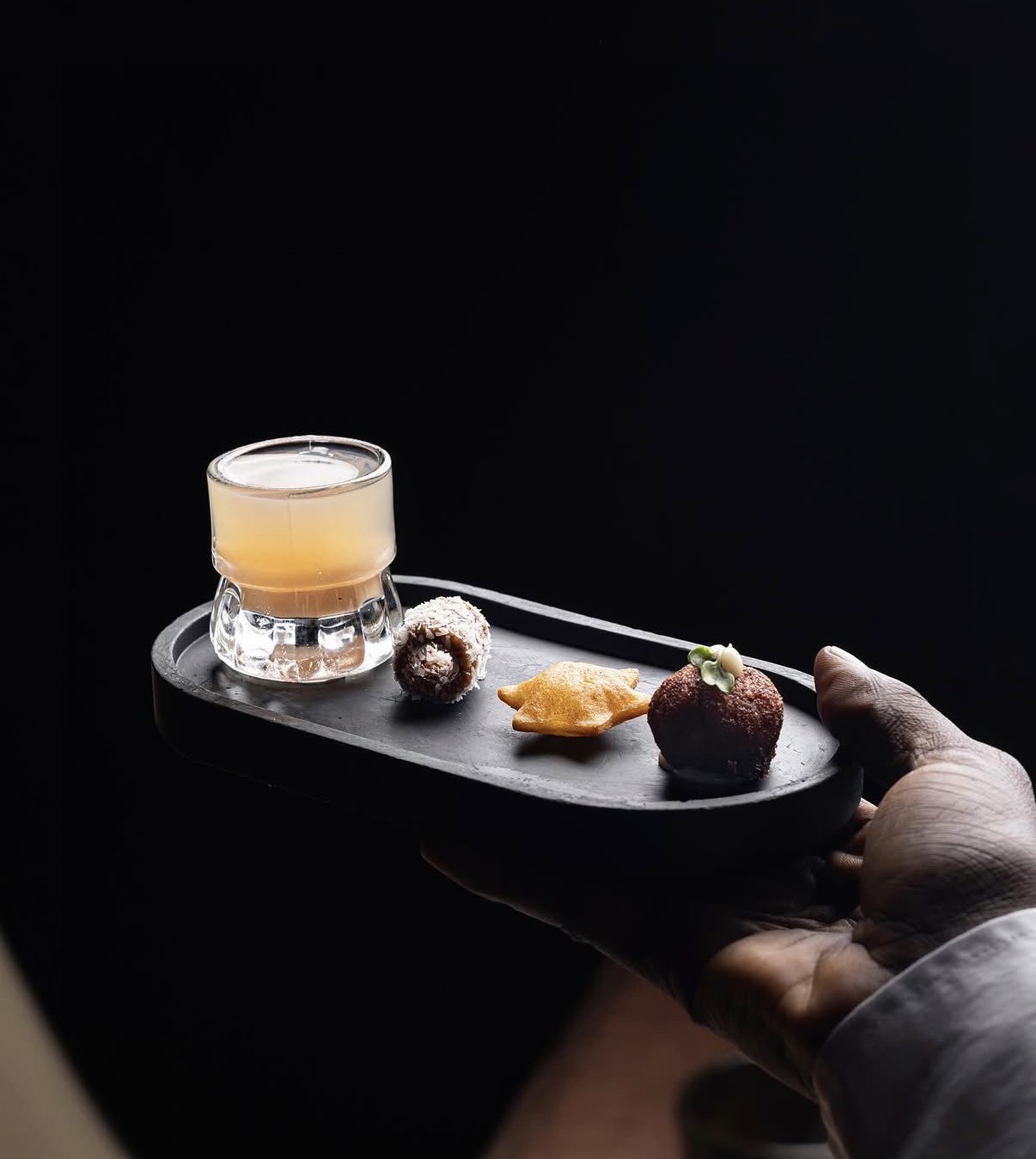
What’s one waste habit from your kitchen that others should steal?
Building “second life intent” into every prep from the start. Before anything is made, we already decide its fallback identities if it doesn’t land on the plate as planned:
Trim becomes stock, excess purée becomes fermentation base or condiment, offcuts are portioned for staff meal integration, aromatics are re-extracted instead of discarded.
It sounds simple, but the shift is psychological, not technical. It forces the kitchen to see ingredients as multi-use systems rather than single-purpose outputs.
That habit alone reduces waste more than any last-minute rescue ever could.
If you had to leave one piece of advice for someone trying to cut waste in their kitchen, what would it be?
Design the dish and its byproducts at the same time. Most waste happens when you only plan for the plated outcome.
If you decide from the beginning what every trim, peel, and surplus becomes, waste stops being an accident and becomes a managed material flow instead of a discard stream.
WRITTEN BY:

Amie Heger
SHARE THIS: